

Trump challenges US TV networks after pool coverage boycott
- The White House launched “TRUMP TV: The Essentials Station,” a 24/7 streaming network, to bypass traditional media following pool coverage suspensions.
- Major networks suspended television pool coverage in solidarity with banned outlets CNN, MS NOW, and Politico, which filed a First Amendment lawsuit.
- Print outlets delayed presidential photo releases while the White House defended the restrictions, asserting press passes are not a constitutional right.
US President Donald Trump launched a 24/7 digital streaming platform dubbed “Trump TV” on Monday evening, countering a decision by major television networks to suspend shared press pool coverage of White House events.
The White House rolled out the platform -officially named “TRUMP TV: The Essentials Station”- as “essential” programming.
The continuous video feed premiered at 7 p.m. ET with a broadcast of a speech delivered by Trump at Mount Rushmore on July 3, featuring real-time updates, past highlights, and administration announcements.
“IT’S LIVE. TRUMP TV IS STREAMING NOW. 24/7, updated in real time, with top past moments, announcements, and the latest and greatest from the administration all in one place. Not every big moment has made it on your tv, now it can,” the White House announced via its official social media channels.
Major networks suspend coverage
The dispute erupted after the White House barred reporters from CNN, MS Now, and Politico from accessing the executive mansion over the weekend.
The exclusion represents the administration’s most aggressive press restriction following last year’s decision to remove the Associated Press from pooled access over its refusal to adopt the “Gulf of America” naming convention.
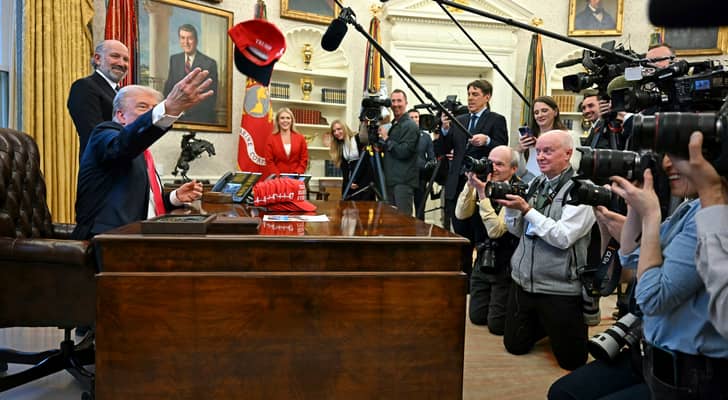
In response, the five major networks that distribute presidential event footage—CNN, NBC, ABC, CBS, and Fox News—announced a suspension of television pool coverage until further notice.
“The public has a vital interest in receiving accurate, independent information about its government. No administration should restrict a news organization because it objects to its reporting,” read a joint statement issued by the five network pool members.
The network blackout manifested on Monday afternoon when major networks declined to air President Trump’s ribbon-cutting ceremony for a new White House helipad prior to his departure for New York.
The White House streamed the ceremony on its own social media channels, though the idle engines of Marine One rendered Trump’s remarks largely inaudible.
Print publications also joined the protest, with The New York Times and The Washington Post announcing they would hold off publishing still photographs of the president taken during the day until after midnight in solidarity with the television networks.
Outlets file federal lawsuit
The administration rejected the media’s objections. In an official statement, the White House maintained:
“Access changes are nothing new. What is new, however, is the sudden claim that it becomes sacred only when the outlets are friendly to the Radical Left. The rule was never ‘every outlet gets in.’ It was always ‘our side stays in.’”
Concurrently, CNN, MS Now, and Politico filed a 27-page federal lawsuit naming US President Trump, White House Communications Director Steven Cheung, Secret Service Director Sean Curran, and Chief of Staff Susie Wiles as defendants.
The filing characterizes the revocation of access as a direct violation of the First Amendment.
The case was assigned to US District Judge Timothy Kelly, who scheduled a hearing for Wednesday at 3:30 p.m. Judge Kelly previously ruled against the White House during Trump’s first term, ordering the restoration of credentials for former CNN reporter Jim Acosta.
Writing on Truth Social, US President Trump criticized the assignment of Judge Kelly -noting he was “sadly, appointed by ‘TRUMP'”- and indicated his administration would appeal any adverse ruling.
Later in the day, after attending a news conference at Gracie Mansion alongside New York City Mayor Zohran Mamdani, President Trump dismissed the impact of the broadcast boycott.
“It’s interesting because they said where they were going to boycott me, but they never boycott me, so I wasn’t very worried about that,” Trump remarked. “Look at all that press,” he added, gesturing toward gathering reporters.
Trump maintained that “fake news” organizations should be restricted from White House access, asserting they are “very bad for national security”.
While the television pool remains suspended, the president’s travel to New York for meetings with Mayor Mamdani and French President Emmanuel Macron on the sidelines of the UN General Assembly continues to be covered by print, radio, wire journalists, still photographers, and the White House in-house video crew.