US federal court blocks Trump sanctions on UN Special Rapporteur Francesca Albanese
- A federal judge has temporarily blocked Trump administration sanctions against UN expert Francesca Albanese, ruling that the measures, which restricted her travel and banking, likely violated her First Amendment rights to free speech.
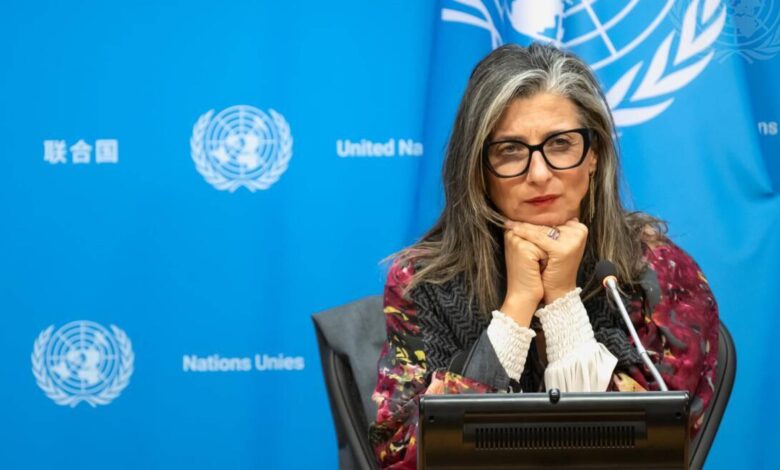
In a significant legal defeat for the Trump administration’s “maximum pressure” diplomatic strategy, a federal judge on Wednesday temporarily suspended sanctions against Francesca Albanese, the United Nations Special Rapporteur on the occupied Palestinian territories.
The ruling, issued by US District Judge Richard Leon, found that the administration likely violated Albanese’s First Amendment rights by imposing punitive measures in response to her outspoken criticism of ‘Israel’ and her advocacy for international legal action against US and ‘Israeli’ officials.
The Legal Ruling: “Freedom of Speech”
Judge Leon’s opinion was pointed, stating that the US government cannot regulate speech simply because it disagrees with the “idea or message expressed.”
“Albanese has done nothing more than speak!” Judge Leon wrote. “It is undisputed that her recommendations have no binding effect on the ICC’s actions, they are nothing more than her opinion.”
The judge emphasized that protecting freedom of speech is “always in the public interest,” regardless of whether the speaker resides outside the United States. Following the news, Albanese took to X (formerly Twitter) to celebrate the decision:
- Albanese’s Statement: “BREAKING! US court has suspended the US sanctions against me! As the judge says: ‘Protecting the Freedom of speech is always just the public interest.'”
- Personal Note: She extended gratitude to her husband and daughter, a US citizen, who filed the lawsuit in February 2026, alleging the sanctions made it “nearly impossible” to manage daily life.
Background: The 2025 Sanctions
The sanctions were originally imposed in July 2025 by Secretary of State Marco Rubio, following an executive order by President Trump. The measures included:
- Entry Ban: Prohibiting Albanese from entering the United States.
- Financial Restrictions: Effectively “debanking” her by freezing access to US-linked financial systems.
The State Department justified the move by accusing Albanese of “engaging in lawfare” and “unabashed antisemitism.” Officials cited her reports, such as Anatomy of a Genocide (2024), and her letters to major US tech firms (including Microsoft, Alphabet, and Amazon) urging them to sever ties with ‘Israel’ over the war in Gaza.
Broader Implications
The suspension of these sanctions marks a pivotal moment for international human rights defenders. Albanese has long argued that the Trump administration’s use of financial penalties against UN officials is a strategy designed to weaken international accountability mechanisms, specifically the International Criminal Court (ICC).
While the Trump administration has not yet formally responded to the ruling, the State Department had previously maintained that it would not tolerate “political warfare” that threatens the sovereignty of the United States or its allies. For now, the court’s intervention provides Albanese a reprieve from the financial and travel restrictions that have hampered her work for nearly a year.