
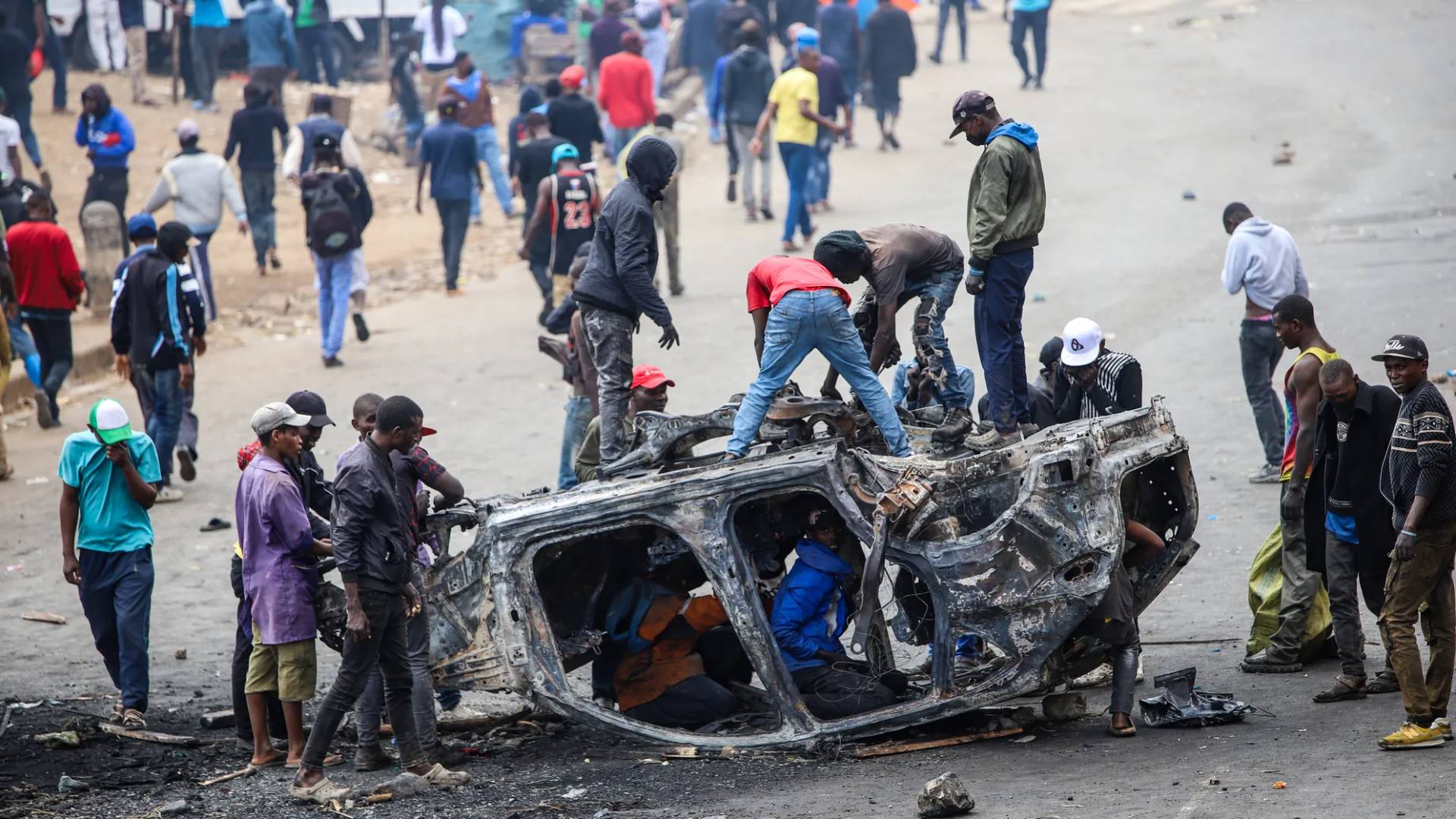
Four killed in Kenya over fuel price protests
- Four people were killed and over 30 others injured during protests on Monday against surging fuel prices in Kenya.
- Public transport strike blocked major roads.
- Kenya hiked diesel prices to 242.92 shillings and super petrol to 214.25 shillings per litre.
- Operators vowing to continue the strike until the president intervenes to lower prices.
Nationwide protests and a public transport strike over spiking fuel prices turned deadly in Kenya on Monday, leaving four people dead and more than 30 others injured.
The violence erupted across several towns after the country’s Energy and Petroleum Regulatory Authority enacted another massive retail fuel price hike for the May 15–June 14 cycle.
Interior Minister Kipchumba Murkomen confirmed the casualties during a televised press conference late Monday, condemning the unrest.
The demonstrations followed a directive from the Transport Sector Alliance, which ordered all affiliated vehicles to ground operations starting midnight Sunday.
Despite police warnings that they would tackle any disruptions, striking operators and scattered groups of protesters successfully blocked major thoroughfares.
In the capital city of Nairobi, protesters lit tires and blocked access to key entry roads, prompting police to fire tear gas.
The gridlock left thousands of commuters stranded and doubled transport costs. Meanwhile, in Mombasa, Kenya’s primary port city, the transport freeze raised immediate fears of severe supply-chain delays.
Iran conflict linked
The unrest is rooted in a worsening cost-of-living crisis exacerbated by the war involving Iran, which has squeezed global oil and gas supplies.
Kenya imports nearly all of its fuel products from the Middle East through government-to-government deals with Gulf suppliers.
Under the latest price adjustments, the pump price for super petrol in Nairobi rose to 214.25 Kenyan shillings ($1.66) a litre from 206.97 shillings.
Diesel prices experienced an even sharper surge, skyrocketing to 242.92 shillings per litre from 196.63 shillings, while kerosene remained unchanged at 152.78 shillings.
This marks a 23.5% increase in retail fuel prices, coming immediately on the heels of a 24.2% hike last month.
Earlier on Monday, Finance Minister John Mbadi defended the administration’s position, stating that current pump prices are already heavily subsidized.
The dramatic fuel spike has profoundly impacted households, driving up the cost of basic commodities.
Food prices have surged alongside transport fares; for instance, the price of four tomatoes has experienced a threefold increase, now costing residents 60 shillings (50 US cents).
Government vs. transport operators
Late on Monday, the ministers of transport and energy held an emergency meeting with public transport operators to break the logjam, but the talks yielded little breakthrough.
The government offered a proposal to bridge the price disparity between diesel and kerosene to prevent fuel adulteration, which the transport associations accepted.
However, the two sides fundamentally disagreed on price reductions. The transport associations demanded a price slash of 46 shillings per litre, a concession the government did not grant.
“We have not agreed on anything,” Albert Karakacha, chairman of the public service vehicles owners’ association, announced at a subsequent news conference. “What we are urging the president is that he must do something because the strike will continue. The strike is still on.”