

Naseer Writes: Trump Igniting Wars, Burdening Europe, and Now Playing with Religious Division
By Dr. Khaldoun Nusair
It seems that U.S. President Donald Trump is no longer satisfied with the political, military, and economic crises that have shaken the world under his leadership. He has now ventured into even more dangerous territory: provoking religious sensitivities and fueling divisions among communities. His recent mockery of the widespread use of the name “Muhammad” targeted a name that holds profound religious and spiritual significance for nearly two billion Muslims worldwide.
How far has the political and moral discourse of the president of the world’s most powerful nation deteriorated when he finds the name of Islam’s Prophet a subject of public ridicule? Does he understand that such rhetoric risks reopening the doors to religious hostility between Muslims and Christians, after humanity has endured centuries of painful religious conflict?
This is not simply an unfortunate choice of words. It is deeply irresponsible rhetoric from a president whose responsibility should be to safeguard international peace, not poison relations between religions and communities.
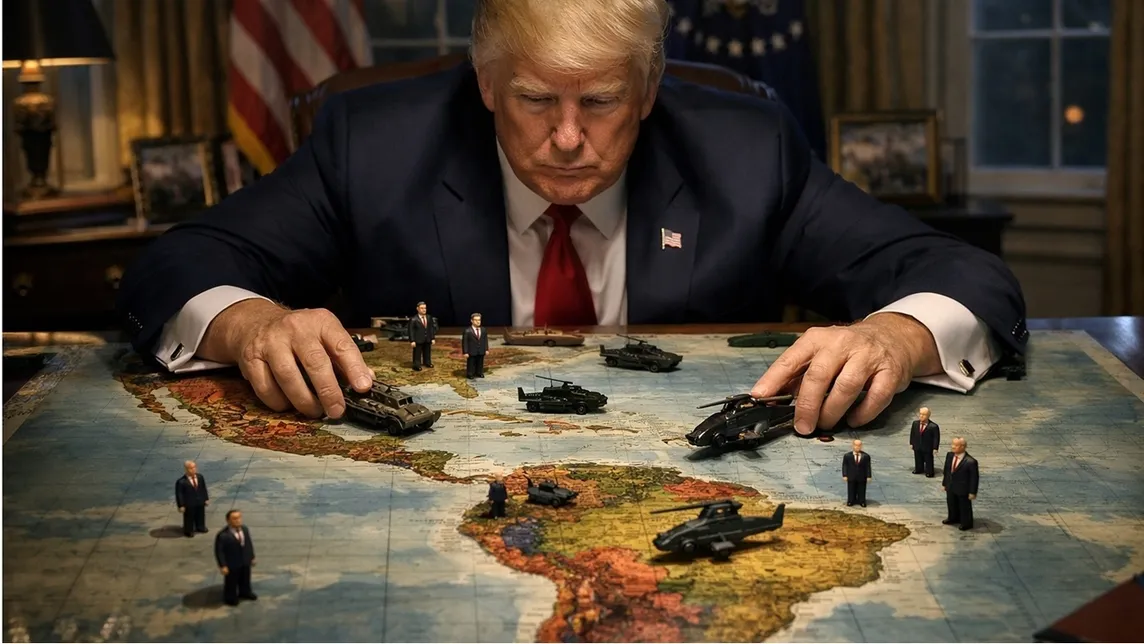
This is the same president whose administration carried out the extraordinary seizure of a sovereign nation’s president and his wife, who continued to provide political and military support to Benjamin Netanyahu despite the devastating humanitarian consequences of his policies and wars across the region, and whose military decisions helped ignite the war with Iran, unleashing economic consequences that have reached even America’s closest allies.
Europe is now paying a substantial part of the price for Trump’s decisions.
Rising energy prices, disrupted international trade, mounting living costs, and growing pressure on European economies are among the consequences intensified by the war with Iran. The protests and unrest witnessed in France, Italy, Belgium, and other European countries cannot be entirely separated from the increasingly difficult economic environment that his policies have helped aggravate, even though these movements also have their own domestic causes.
The irony is striking. A president who repeatedly promises to make America great again has increasingly forced America’s allies and ordinary people around the world to bear the consequences of his political and military gambles, as though the global economy were a minor detail in his calculations and the suffering of millions did not justify reconsidering a single decision.
Even more disturbing is the contradiction of a president who speaks of peace, openly supports Netanyahu’s policies, and then publicly mocks the name Muhammad, apparently expecting the world to accept this contradiction as normal.
What kind of political hypocrisy is this? What degree of moral bankruptcy allows the leader of a global superpower to contribute to escalating wars while treating the religious identity and deeply held beliefs of Muslims with such contempt?
Our disagreement is not with Christians, the American people, or any religion or nation. It is with a political mentality that increasingly substitutes power for wisdom, provocation for leadership, and manufactured crises for genuine statesmanship.
It is now entirely legitimate to ask: How many more wars must erupt? How many economies must suffer? How many nations must pay the price before the international community recognizes that the problem is no longer merely the crises Trump faces, but the crises his own decisions help create?
The greatest danger of Trump’s conduct today is not simply that it destabilizes the international order, but that his rhetoric risks dragging humanity back toward religious divisions we once hoped had been left behind.
History will not judge presidents solely by the size of their military power. It will judge them by the consequences of their decisions, the destruction they leave behind, and the opportunities they squandered to build lasting peace.
So, does Donald Trump wish to be remembered as a peacemaker, or as the president who fueled wars, burdened economies, and then risked igniting religious divisions?