


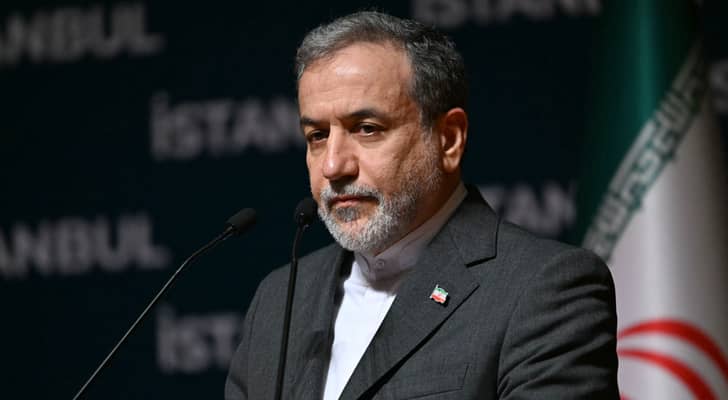
Araghchi: US, ‘Israeli’ attacks on Iran caused serious environmental risks
- Iran’s Foreign Minister Abbas Araqchi accused the United States and ‘Israel’ of causing serious environmental damage through attacks on Iranian oil, energy and nuclear facilities, calling for accountability under international law.
- Speaking at a conference in Tehran, Araqchi cited environmental destruction in Gaza, Lebanon and Iran, urging stronger international mechanisms to document wartime damage and consider recognizing ecocide as a separate international crime.
Iranian Foreign Minister Abbas Araqchi has called for stronger international mechanisms to hold those responsible for environmental destruction during armed conflicts accountable, accusing the United States and ‘Israel’ of causing serious environmental risks through attacks on Iran’s energy infrastructure.
Addressing the international conference “Ecocide: The Silent War Crime” in Tehran on Sunday, Araqchi said military attacks on Iranian oil and energy facilities during the past two wars had caused significant environmental damage. He also described attacks on Iran’s nuclear facilities as an “unforgivable crime” under international law.
“We must not allow the aggressors to escape responsibility for their criminal actions,” Araqchi said.
He argued that environmental destruction during warfare extends beyond ecological damage, directly affecting the right to life, public health, food security, international peace and the rights of future generations.
Araqchi cited attacks on oil, refinery and energy facilities in Iran, particularly those in and around urban areas, as a source of serious environmental concern.
He referred to a March 2026 assessment by the United Nations Environment Programme (UNEP) concerning attacks on oil facilities, including sites in Tehran, which he said caused fires that released hazardous compounds.
According to Araqchi, pollutants can spread through the air, contaminate soil and water resources, and potentially enter the food chain. He warned that the consequences could impose long-term health and environmental costs on civilians, particularly children.
He also condemned attacks on Iran’s nuclear facilities, arguing that they constituted a grave violation of international law.
Araqchi identified Gaza and Lebanon alongside Iran as examples of the environmental consequences of military operations.
In Gaza, he highlighted the collapse of water and sewage networks, damage to waste-management systems, contamination of water and soil, coastal pollution, and the accumulation of rubble and potentially hazardous materials.
He cited UNEP assessments documenting extensive environmental damage in the Palestinian territory, warning that its effects could persist for decades.
In Lebanon, Araqchi pointed to damage to forests and agricultural land, the destruction of millions of square meters of land, damage to tens of thousands of olive trees and coastal pollution following attacks on oil storage facilities.
He said the consequences of such destruction extend well beyond the immediate period of hostilities, affecting livelihoods, public health and the recovery of damaged ecosystems.
Araqchi urged the international community to move beyond statements of concern and establish effective mechanisms to prevent, document and punish environmental destruction during armed conflicts.
He called for the effective implementation of international humanitarian law, particularly the principles of distinction and proportionality, while emphasizing the need to assess the direct, indirect and long-term environmental consequences of military operations.
He also proposed mechanisms for independently documenting environmental damage, evaluating its lasting effects, providing compensation and ensuring accountability.
Iran, he said, supports legal and expert discussions on strengthening international environmental protections, including consideration of recognizing ecocide as a separate international crime.
The Iranian foreign minister warned against double standards and the politicization of environmental protection, arguing that international environmental obligations should be applied fairly, transparently and without discrimination.
He also called for restrictions that hinder countries’ access to financing, technology and essential equipment for environmental protection and climate action to be examined under international law.
Araqchi outlined three priorities for international cooperation: stronger legal frameworks and clear criteria for addressing severe environmental destruction; impartial scientific mechanisms to document wartime damage and determine responsibility; and expanded regional and international cooperation to prevent further destruction and restore damaged ecosystems.
Araqchi described the 31st Conference of the Parties to the UN Framework Convention on Climate Change (COP31) as an opportunity to highlight the environmental and climate consequences of military aggression.
He said Iran was prepared to contribute its scientific, legal and diplomatic expertise to international efforts to protect the environment and strengthen accountability.
Araqchi concluded that those responsible for environmental destruction must not be allowed to evade responsibility, stressing the need for collective action to protect ecosystems, civilians and future generations.