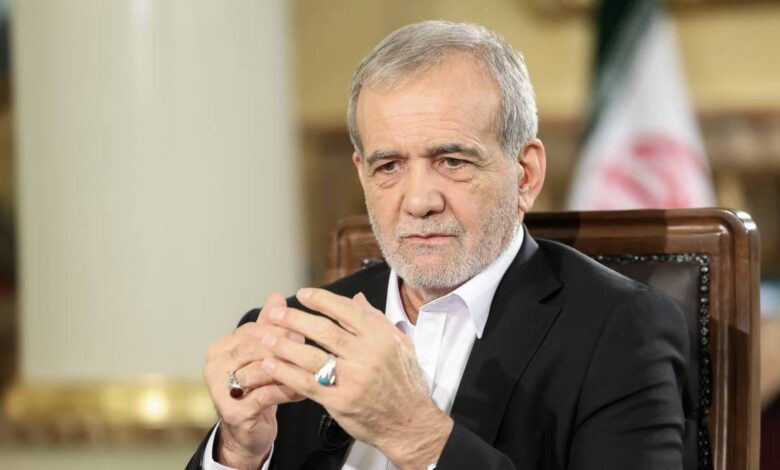
Pezeshkian: Economic exploitation during war will not be tolerated
- Iranian President Masoud Pezeshkian warned that the government will crack down on those using the current regional conflict to manipulate markets or pressure the livelihood of citizens.
- Iran’s core strategy focuses on “controlling consumption” and preventing “artificial demand” to maintain social stability.
During a high-level meeting on Sunday centered on market regulation and the role of trade unions, Iranian President Masoud Pezeshkian issued a warning to those attempting to exploit the national crisis for financial gain.
“We will not allow anyone to target the livelihoods of the people by taking advantage of war conditions,” Pezeshkian stated, referring to the economic fallout of the war.
He emphasized that while the state encourages healthy economic activity, it will act decisively against hoarding and price gouging.
Combatting “artificial demand”
Pezeshkian identified “controlling consumption and preventing the formation of induced or false demand” as one of the government’s most essential current policies.
He warned that the creation of unrealistic demand -without a corresponding supply of goods- leads directly to public dissatisfaction and social unrest.
Regulatory focus: The government is working with domestic guilds and unions to ensure that essential goods are distributed fairly.
Psychological stability: By managing market expectations, the administration hopes to prevent the panic-buying that has occasionally gripped major cities since the conflict escalated in early 2026.
Balancing economic freedom, security
Despite the wartime footing, Pezeshkian clarified that the state does not intend to impose stifling restrictions on “healthy economic activities.”
The goal, he explained, is to create a supportive environment for legitimate producers and traders while isolating those who engage in “economic sabotage.”
Pezeshkian invited the private sector to participate actively in market regulation, suggesting that if manufacturers provide discounts and support for damaged households, the government will reciprocate by facilitating the import of raw materials and providing logistical backing.
Domestic front of conflict
Pezeshkian’s remarks highlight that the Iranian leadership views the economic front as just as critical as the military one.
As the nation navigates a complex ceasefire and begins the arduous task of rebuilding infrastructure damaged by ‘Israeli’ and US strikes, maintaining the affordability of basic necessities remains the government’s primary tool for ensuring internal loyalty and preventing domestic protests.