
Iran rejects French claims of IRGC cyberattack on supermarket refrigeration systems
Iran has rejected French accusations that its Islamic Revolutionary Guard Corps was responsible for a large-scale cyberattack that disrupted supermarket refrigeration systems across France in October.
On Monday, French Foreign Minister Jean-Noël Barrot publicly attributed the attacks to the IRGC, describing them as “unprecedented in both its scale and its level of aggression” and “the first large-scale cyber-attack aimed at sabotage on our national territory.”
He said the incident constituted “a major attack on the nation’s interests and the security of the French people.”
France summoned Iran’s ambassador to Paris to lodge a strong protest and indicated it would pursue European Union sanctions while not ruling out other measures.
The attacks occurred overnight on 11–12 October.

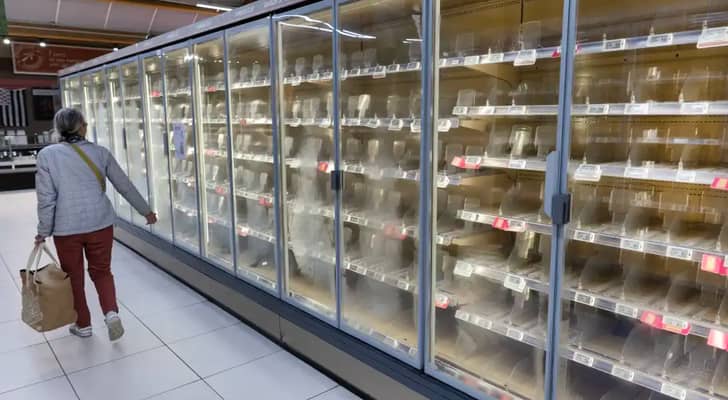
Hackers remotely accessed refrigeration controllers—primarily systems supplied by firms such as Danfoss—at roughly 700 retail sites belonging to major chains including Intermarché, Carrefour, E.Leclerc, Coopérative U and others.
They initiated abnormal, indefinite defrost cycles and disabled temperature alerts, causing internal temperatures to rise sharply (in some cases to around 50°C).
This led to widespread spoilage of chilled and frozen food, losses estimated in the tens of millions of euros, and at least 15 fires.
Paris prosecutors opened a judicial investigation into the Shahid Kaveh unit, described as an offensive cyber group affiliated with the IRGC’s Electronic and Cyber Centre.
Prosecutor Laure Beccuau said investigators had identified a modus operandi characteristic of the group, including traces of Farsi in the attack infrastructure and IP addresses linked to devices in Iran.
International arrest warrants were requested for the unit’s leadership and associated individuals.
Iran’s Foreign Ministry rejected the claims on Tuesday as “baseless and one-sided”.
It “strongly condemns this hackneyed policy of levelling accusations against the Islamic Republic” and accused France of seeking to divert attention from its own policies.
In a pointed remark, the ministry stated: “A government that cannot even manage the temperature of its own refrigerators now seeks to shift the blame onto foreign actors through these preposterous accusations.”
Tehran also said it would not hesitate to take necessary measures to protect its interests if faced with unlawful actions.
Barrot said France’s response aims “to deter anyone who might be tempted, in Iran or elsewhere, to do it again,” and that Paris “rules nothing out,” including possible non-public measures.
Similar refrigeration disruptions have been reported in other European countries since the French incidents, though authorities have not confirmed any direct link.
Relations between Paris and Tehran remain strained over a range of issues, including Iran’s nuclear programme and regional activities.