


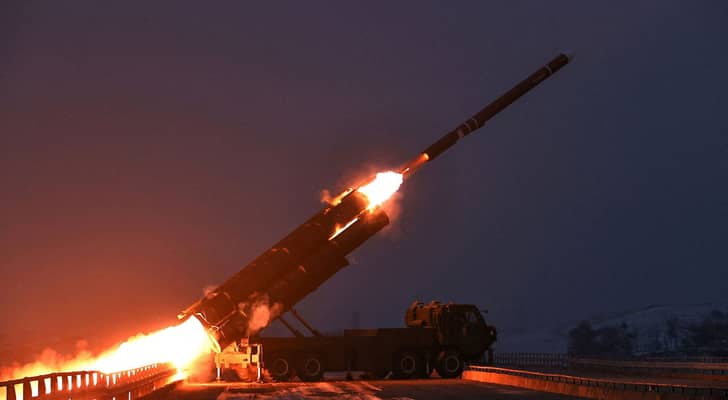
North Korea fires multiple ballistic missiles: Seoul
- The test follows heightened friction over a September 21 landmine explosion that injured three South Korean soldiers, which Pyongyang denies.
- The launch follows Pyongyang’s AI-enhanced October 3 missile test and acts as a show of force against South Korea’s recent hypersonic glide vehicle test.
North Korea launched multiple ballistic missiles off its eastern coastline on Monday morning, South Korea’s military said, marking the latest escalation in regional security tensions.
South Korea’s Joint Chiefs of Staff (JCS) reported detecting several ballistic missiles launched from the Pyongyang area toward the East Sea (Sea of Japan) at approximately 09:20 local time (00:20 GMT).
In response to the detected activity, South Korea’s military stepped up surveillance and vigilance for potential additional launches.
Japan’s Ministry of Defense separately confirmed the detection of at least one suspected ballistic missile launched by Pyongyang.
Cross-border tensions have intensified following a September 21 landmine incident in the Demilitarized Zone (DMZ), where two landmine detonations injured three South Korean soldiers in a Seoul-controlled section.
While a joint investigation by Seoul and the UN Command concluded that Pyongyang planted the mines over a year ago, North Korea has vehemently rejected the findings and refused demands for an apology.
Kim Yo Jong, sister of North Korean leader Kim Jong Un, labeled South Korea’s demands “despicable” and rejected planned transfers of medical equipment, asserting Thursday that Seoul must show “utmost respect, consideration and sincerity” if it wishes to restore ties.
The launches also follow recent technological developments by both nations. On October 3, North Korea fired a ballistic missile featuring low-altitude orbit-changing capabilities and integrated artificial intelligence.
Days later, South Korea’s presidential office announced the successful test of its first domestically produced hypersonic glide vehicle (HGV), designed to enhance deterrence against key regional targets.
Technically remaining at war since the 1950–1953 Korean War ended with an armistice rather than a formal peace treaty, both nations remain on high military alert.