Globalisation is being repriced and it won’t be cheap

For more than three decades, the global economy operated on a single organising principle: efficiency above all else.
Capital flowed freely, supply chains stretched across continents, and geopolitical risk was treated as an externality. That assumption is being abandoned.
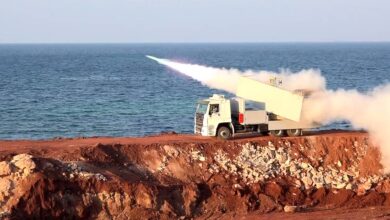
The recent disruption of the Strait of Hormuz, through which roughly a fifth of the world’s oil normally passes, has accelerated a rethinking that was already under way.
Energy prices have spiked. But the more consequential effect is structural: the episode has forced policymakers, corporate strategists, and investors to confront how much fragility has been built into the architecture of global trade. What is taking place is not the death of globalisation. It is its repricing.
The efficiency-first model
The model that prevailed from the 1990s onwards was built on just-in-time logistics, lean inventories and the relentless pursuit of cost optimisation. It rewarded scale and speed. It assumed stability, particularly at the chokepoints through which much of global commerce flows.
The efficiency-first model systematically underpriced shocks. Toyota’s 2011 parts crisis and the pandemic semiconductor collapse both demonstrated that lean supply chains fail catastrophically precisely when they are needed most.
The Hormuz disruption compounds that lesson: beyond petrol prices in wealthy economies, the real damage lands on sub-Saharan Africa and parts of Asia, where imported energy and fertiliser are dollar-denominated necessities, and fiscal buffers barely exist.
It is vital not to underestimate systemic interdependence. The immediate focus has been on crude oil and gas. But fertiliser markets – particularly urea, ammonia, and phosphates – have also been destabilised, with consequences that will only become clear across coming planting seasons in food-importing nations.
What began as a regional energy shock has widened into something broader: a compounding of energy, food and inflationary pressure.
For energy-importing economies, this means higher import bills, deteriorating current account positions, and renewed constraints on central banks already navigating a delicate balance between growth and price stability.
The new macroeconomic arithmetic
Supply chains are now being redesigned not for efficiency but for survivability. Companies are diversifying sourcing. Governments are reshoring strategically sensitive industries. Investors are placing a premium on redundancy.
Resilience has replaced efficiency as the animating logic of global trade.
The post-crisis macroeconomic landscape will not yield to familiar instruments. Exchange rates, interest rates and fiscal transfers remain available – but their effectiveness is being eroded by pressures that are structural rather than cyclical.
As governments compete to onshore critical industries, subsidise energy and food and secure supply chains, fiscal positions will stay under sustained pressure.
Inflation, in this environment, will prove stickier and more uneven than conventional models anticipate – driven not by demand excess but by the compounding costs of resilience: duplicated capacity, strategic stockpiles and shorter but more expensive supply chains.
For central banks, this presents a trap without an obvious exit: if price pressure is rooted in supply architecture rather than demand, tightening financial conditions risks compressing growth without resolving the underlying cause. The countries that navigate this most effectively will be those that align fiscal, industrial and trade policy into a coherent framework – accepting higher structural costs as the price of strategic autonomy.
Three shifts
Even if geopolitical tensions ease, the global economy is unlikely to revert to its previous equilibrium.
Three structural changes appear durable. First, a geopolitical risk premium is being permanently embedded into markets – in shipping, insurance, energy infrastructure and commodity pricing. The cost of exposure to vulnerable corridors will not fall back to pre-disruption levels.
Second, governments and corporations are moving towards strategic stockpiling of critical inputs. Energy reserves, fertilisers, food staples and semiconductor components are increasingly treated as matters of national security.
Third, there is a shift towards economic sovereignty. Countries are demonstrating a willingness to sacrifice efficiency for control through domestic production mandates, regional supply agreements and expanded state intervention.
These shifts will reshape entire sectors. Energy systems built on diversified supply – LNG, decentralised generation, renewables with storage – will attract sustained capital inflows.
Agricultural innovation that reduces dependence on imported fertilisers stands to benefit. Logistics networks that bypass traditional chokepoints will gain strategic relevance. Defence and critical infrastructure protection will remain elevated spending priorities.
The headwinds will be felt most acutely in sectors exposed to fuel costs and long global supply chains – parts of aviation, fast fashion and certain consumer goods. Emerging markets reliant on imported energy and food will remain particularly vulnerable.
A different kind of integration
The lesson is not that global integration has failed. It is that integration designed without regard for systemic risk was always more fragile than it appeared. The next phase of globalisation will be defined less by how seamlessly goods cross borders than by how robust those systems are under stress.
The era of globalisation as a pure engine of cost reduction is over. In its place is emerging a model in which the price of access to global markets incorporates the risk of the world as it is. The repricing is already under way across energy, food, logistics and capital markets. The question is no longer whether to adapt. It is who absorbs the cost and who gains control, in a system where resilience has become the new currency of power.
thenationalnews