

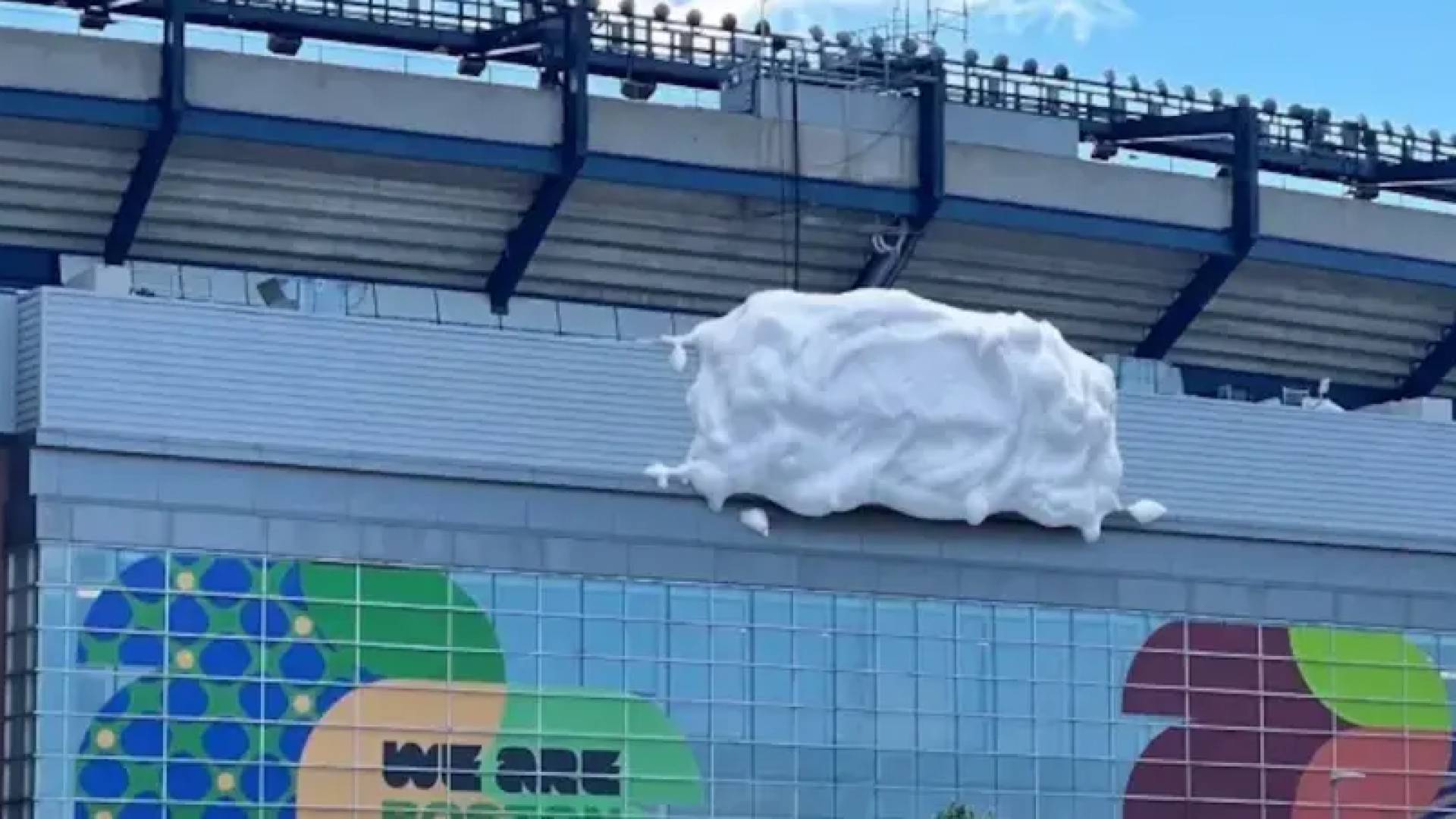
FIFA asks Gillette to hide logo at stadium, brand turns it into shaving foam design
- Brands use creative visual tricks to preserve identity after losing World Cup sponsorship visibility rights.
- FIFA logo restrictions turn into viral marketing opportunities for ‘Levi’s’ and Gillette Stadium.
The push to strip commercial logos from World Cup venues in the United States has led to unexpected marketing creativity, with brands finding subtle ways to stay visible despite strict regulations from ‘FIFA’.
At what is officially known during the tournament as Gillette Stadium, now referred to as Boston Stadium, organizers were required to remove all non-sponsor branding because the razor company ‘Gillette’ is not an official World Cup partner.
Instead of a traditional blackout of branding, the stadium introduced a visual workaround: the logo was replaced with an image resembling shaving foam. The design effectively erases direct corporate signage while still evoking the brand’s core identity.
The result quickly spread across social media, with fans highlighting how the imagery remains instantly recognizable even without the official logo.
A similar strategy emerged earlier at venues associated with ‘Levi’s’, where naming rights branding was restricted for the tournament.
Rather than fully removing its presence, the company leaned into its signature design language, covering logos while preserving the distinctive red tab aesthetic and curved visual elements associated with the brand.
The approach allowed the brand identity to remain visible without violating World Cup sponsorship rules, creating what observers described as a “hidden branding” effect that still registers immediately with viewers.
Under ‘FIFA’ regulations, only approved sponsors can display commercial branding during tournament broadcasts and within official venue presentation. This has forced stadium operators and naming-rights holders to remove or alter signage that would normally be visible year-round.
However, rather than eliminating brand presence entirely, companies are adapting through visual reinterpretation. The result has been a wave of viral content, as fans notice and share the creative substitutions online.
Marketing analysts note that these tactics can generate more attention than standard advertising, turning regulatory limits into unintended promotional value.