
Day 100 | Ceasefire faces further strain as US and Iran launch new strikes
A fragile ceasefire between Washington and Tehran is facing renewed strain after a new round of Iranian and US strikes. Pakistani mediators have arrived in Iran for further talks expected this weekend, aiming to revive stalled negotiations and secure a breakthrough in long-deadlocked peace efforts. The diplomatic push comes as both sides signal continued readiness to engage despite escalating military pressure.
The latest escalation followed US strikes on coastal radar surveillance sites inside Iran after US forces intercepted drones it said were launched toward the Strait of Hormuz. Iran responded with a wave of attacks targeting Kuwait and Bahrain, claiming it had struck a US air base and other military facilities in the Gulf region. The exchange marks one of the most serious flare-ups since ceasefire discussions began.
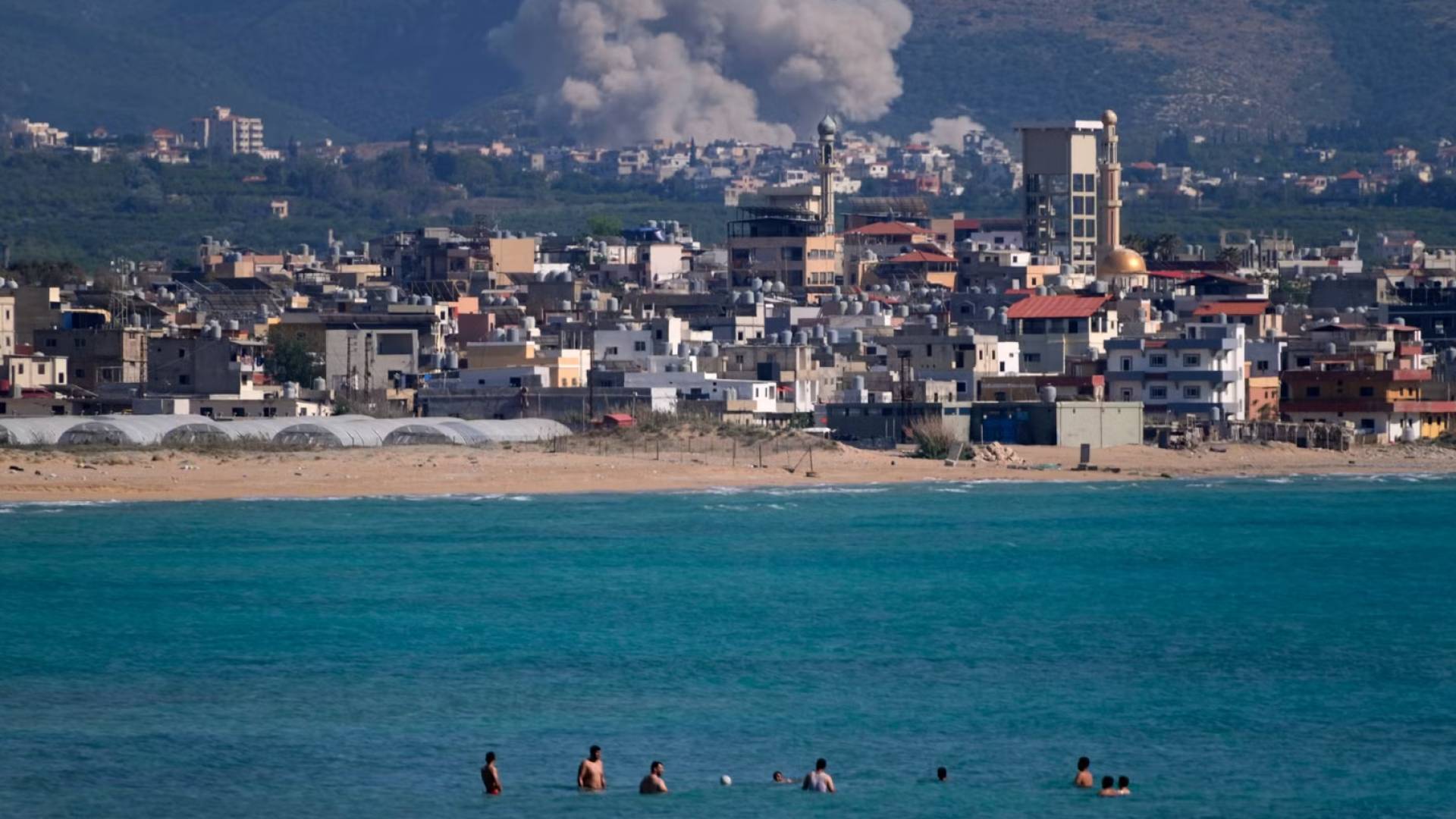
In Lebanon, a senior Lebanese army general was among several soldiers killed on Saturday in a strike attributed by Beirut to ‘Israel’. The Lebanese army said the strike hit during ongoing hostilities in the south of the country. ‘Israel’ said its military campaign is focused on Hezbollah positions, as the Iran-backed group continues to reject an extension of a ceasefire agreement reached between Beirut and Tel Aviv.
Sirens wail across northern ‘Israel’, suspected UAV infiltrates from Lebanon
The ‘Israeli’ Home Front Command activated emergency air raid sirens in the northern border communities of Metula and Misgav Am following the detection of a suspected hostile drone infiltrating ‘Israeli’ airspace from Lebanon.
This is a developing story.
US forces shoot down Iranian attack drones in Strait of Hormuz
The US Central Command (CENTCOM) said its forces shot down two Iranian one-way attack drones near the Strait of Hormuz, claiming they posed a threat to international maritime traffic.
In a statement, CENTCOM said the drones were intercepted as part of ongoing efforts to protect shipping routes and regional security.
The command added that American forces remain prepared to respond to further threats in the region.
“American forces remain postured and ready to continue defending against Iranian aggression,” CENTCOM said.
Yemen condemns Iranian attacks on Bahrain and Kuwait
Yemen’s Foreign Ministry has strongly condemned Iran’s recent attacks on Bahrain and Kuwait, describing them as a serious threat to regional security and stability.
In a statement, the ministry said the attacks represented “a highly dangerous escalation” and accused Iran of pursuing policies that undermine peace and sovereignty in the region.
Yemen joins a number of Arab countries, including Egypt, Qatar, Palestine and Saudi Arabia, in condemning the attacks targeting the Gulf states.
The ministry also called on the international community to take a firm position against Iran’s actions and work to prevent further escalation.
“The Republic of Yemen further calls on the international community to take a firm stance against these Iranian attacks and to deter its practices that threaten regional security and sovereignty and undermine international and regional peace and stability,” the statement said.
US plans to allow Iranian assets to be used for rebuilding in Gulf states
The United States plans to allow Iranian assets to be used to support rebuilding in Gulf countries impacted by future Iranian attacks, according to a source familiar with Treasury Secretary Scott Bessent’s thinking.
The Treasury Department will also consider using Iranian assets to support repairs for past damage, according to the source who confirmed earlier reporting from Reuters on Saturday.
Bessent’s team will assess conditions in Gulf countries and request estimates of the cost of repairing damage inflicted by Iran since the start of the conflict.
The US plan comes as Tehran has once again targeted Gulf states, with Kuwait and Bahrain recently intercepting ballistic missiles launched from Iran. Several Gulf states have faced repeated Iranian attacks since the US and Israel first launched strikes in February.
US hits Iranian radar sites as Tehran responds with attacks
Iran’s state broadcaster IRIB reported that the Islamic Revolutionary Guard Corps launched attacks against a US air base and other American facilities in response to what it described as US “hostile actions.”
Tehran condemned the US strikes on its radar installations as a violation of the ceasefire agreement. Iran’s Foreign Ministry said its military response was “vigilant, decisive and proportionate.”
Gulf states condemn attacks
Kuwait said its air defenses detected and dealt with seven ballistic missiles that entered its airspace at dawn. Bahrain reported intercepting and destroying three missiles and several drones launched from Iran.
Neither country reported casualties, but both condemned the attacks. Saudi Arabia, the United Arab Emirates and Egypt also criticized Iran’s actions, warning that the strikes threaten regional security and stability.
What we know about the latest US and Iranian strikes
The US military said it carried out strikes on coastal surveillance radar sites in Iran on Friday evening after intercepting four Iranian one-way attack drones reportedly heading toward the Strait of Hormuz.
US Central Command said American forces also intercepted an overnight wave of Iranian fire directed at Kuwait and Bahrain. No US personnel were reported injured.
Iranian state broadcaster IRIB reported that the Islamic Revolutionary Guard Corps launched overnight attacks targeting a US air base and other US facilities, describing them as a response to what it called “hostile actions” by US forces.
Tehran also accused the US of violating the fragile ceasefire after strikes on its radar infrastructure. Iran’s Foreign Ministry said its military response was “vigilant, decisive and proportionate.”
Kuwait’s Ministry of Defense said it detected and neutralised seven ballistic missiles in its airspace at dawn. Bahrain said it intercepted three missiles and multiple drones launched from Iran.
Neither country reported casualties, but both strongly condemned the latest attacks. Regional governments, including Saudi Arabia, Egypt and the United Arab Emirates, also criticised Iran’s strikes, warning they threaten Gulf security and stability.